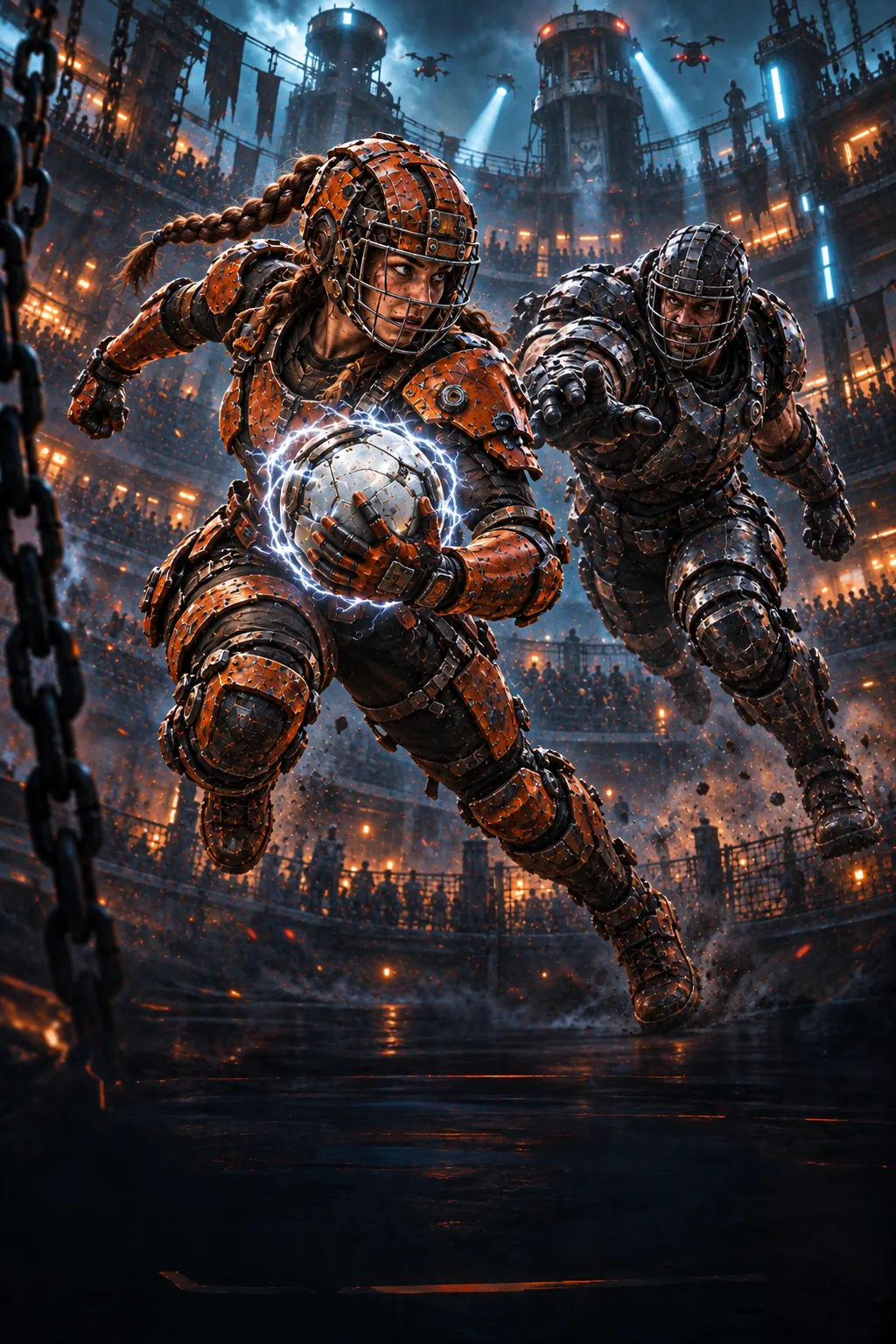
Free arcade sports game
Armoured contact sport. Free in your browser.
Nine a side, ninety-second halves, and a referee nobody has ever seen.
The ball has a reactor in it, the side walls pay out when you hit them, and an opponent carried off scores ten points, same as a goal. You inherit the worst club in the league and two seasons to do something about it.
Free sports game. Nothing to install, no account, no safety net.
Trailer
Fifty seconds in the Yard
Every match shot in it was played in the browser build, the one you can open right now.
The scoreboard
Where the points come from
Every way to score, in one table. Half of them have nothing to do with the goal.
10
Goal
Into the opposing cage, the dull way.
10
Injury
An opponent stretchered off. Ten points, and out for the rest of the match.
2
Wall star
Five on the side walls. Light all five and the bonus lands.
2
Bounce dome
The ball comes back off it at an angle nobody chose.
×2
Multiplier
One gauge, shared. Drag it your way first, then score into it.
90s
Per half
Two of them, plus every stoppage for a body on the floor.
Two minutes of a match
What the floor looks like by the second half
Cut from matches played in the browser build: the hit, the replay, and nothing staged. Turn the sound up.
Contact
The button that passes the ball tackles when you do not have it. How hard it lands depends on speed against power, and the floor keeps a record of every one that landed.
The stretcher
Empty a player’s energy and they are carried off: ten points to the other side and a substitute on in their place. With an empty bench they come back themselves, at seventy per cent of their pace.
Six ways in
Pick your fight
A career if you have two seasons to spare, a quick match if you have five minutes, and four ways to drag your friends into it.
Career
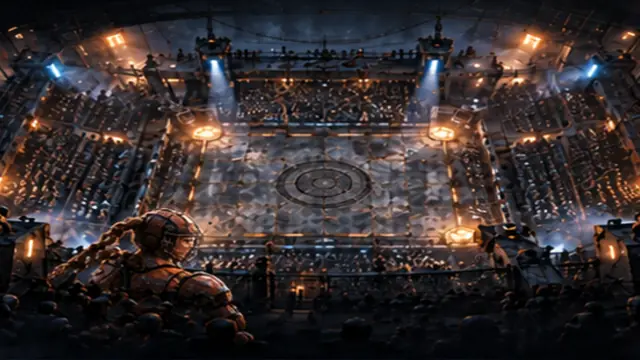
League, cup or knockout. The league hands you the worst club in Division 2 and two seasons to win the title. The cup is four rounds of one match each. Knockout has no save: lose once and you start over. Your squad starts mixed, and you decide who plays as a man or a woman.
Quick match
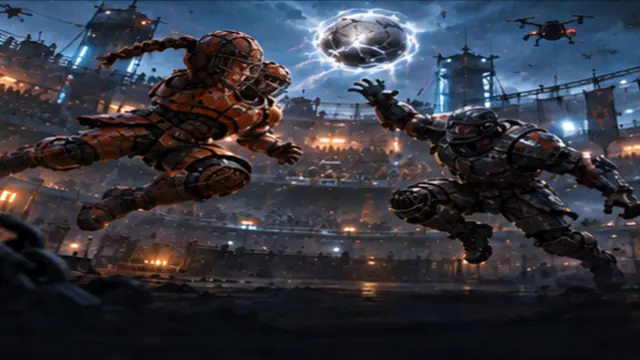
One match, nine a side, with nothing riding on it. Field men, women or a mixed squad. Play the AI on the ground and at the difficulty set in the options, or send a friend a code: both phones run the same match, with no game server in between.
3v3
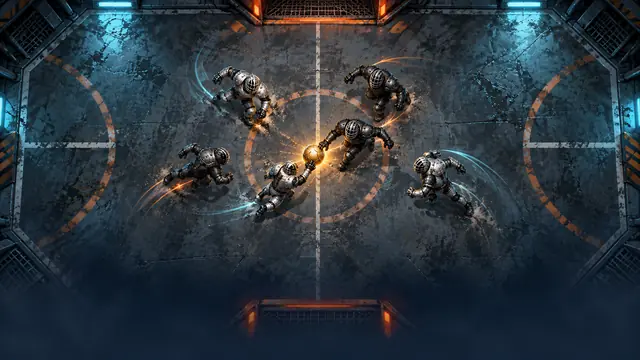
Three a side on a small pitch, no keeper, no bench, and one athlete of your own, man or woman, from kick-off to the final whistle. Play it solo with two AI teammates, or open a room for up to five friends and let the AI fill the gaps. Knocked out, you are back three seconds later, but the other side already has its ten points.
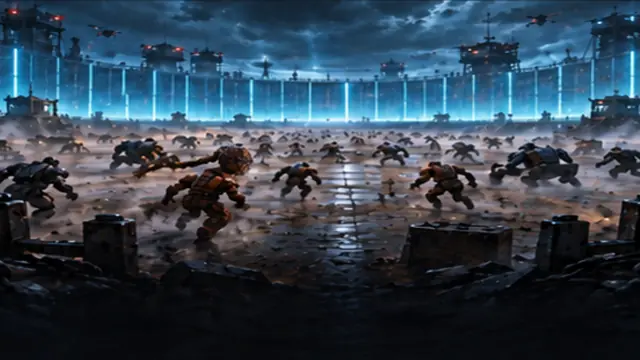
Battle Arena
A hundred players, men and women, on an open floor. No cages, just goal rings, and a wall of light that closes in six times. Bring up to fifteen friends; only one of you walks out.
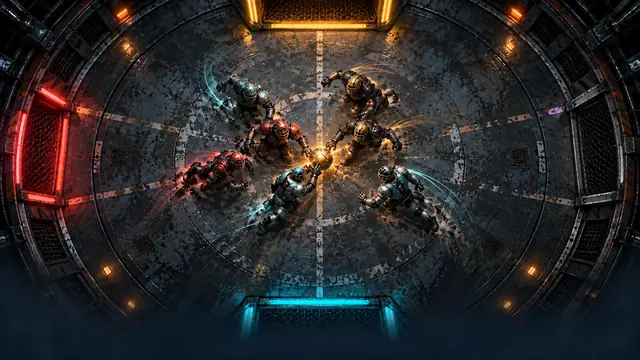
Circle
Three or four teams of three in a round arena, each defending an arc of the wall. Every goal you let in costs one of your five lives; light three stars on the wall in your colour and you win one back. Out of lives, your goal shuts and your team is out, and after three minutes every goal starts to widen. Play it solo against the AI, or open a room for up to eleven friends spread across the teams.

Practice
You, the ball, the ramps, and nobody in the way. The place to learn curling shots before you try one in a match.
The pitch fights back
Everything bolted to the arena wants a piece of the ball
Five kinds of fixture, and every one of them scores.
Wall stars
Five lightable targets on the side walls, two points each and a bonus for the full set. The other side can light one back and take those two points with it.

Bounce domes
Floor bumpers worth two points a hit. They also return the ball on a line neither team asked for.
Multiplier ramps
Roll the ball through and the shared gauge shifts one notch your way. Two notches ahead and everything you score counts double, the injury you were about to cause included.

Electro pads and warp gates
A charged ball knocks down whoever it touches. A warp gate takes it off one wall and spits it out of the other, at speed, behind your defence.

Coins and tokens
Coins score nothing at all; they pay for gym points between matches. Tokens buy six seconds of bent rules — frozen opponents, ratings at maximum, a squad nobody can tackle.
The grounds
Seventeen grounds, one rectangle, seventeen ways to read it
Every ground fields the same furniture: five wall stars, two bounce domes, two ramp entries, four electro pads and four warp gates. What changes is where it is bolted — and that changes the match.
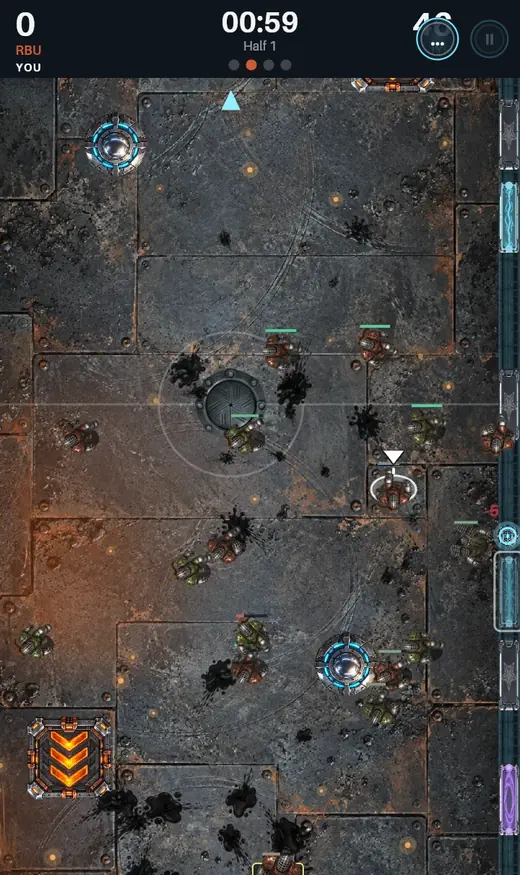
Slag Foundry
The furniture at rest: an even reading from end to end.
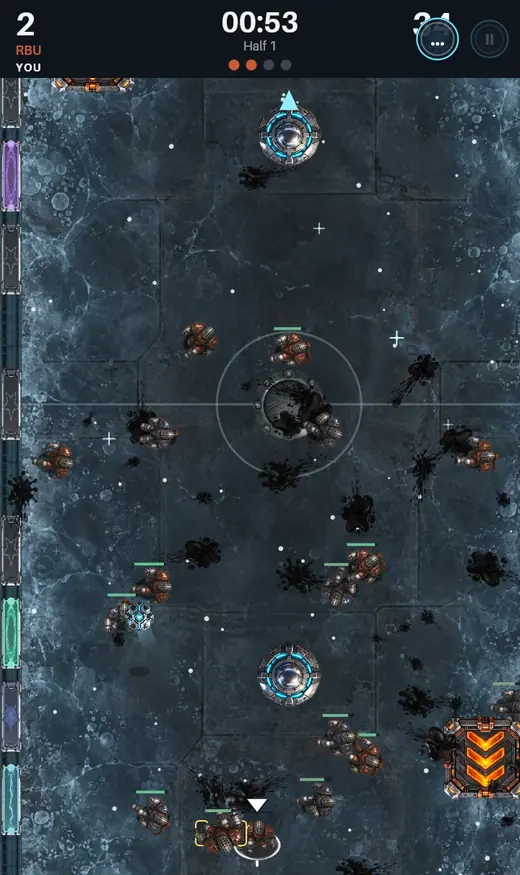
Cryo Glacis
All five stars on one wall: one flank scores, the other runs.
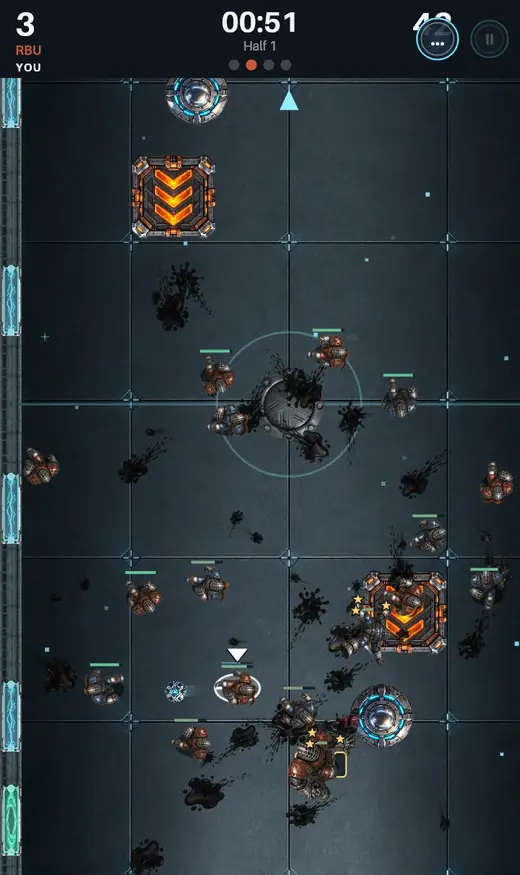
The Arcology
Laid out by machines: nothing on this floor is improvised.
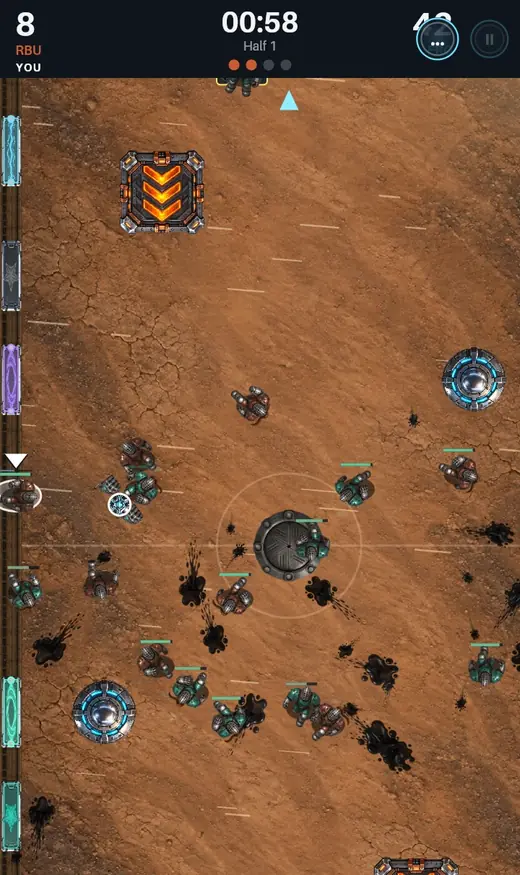
The Dustbowl
The widest of them all, with both ramps buried in a corner.
Controls
One stick and one button
Built for a phone held in two hands. On a desktop: the arrows or WASD, and the space bar.
Tap to pass
A quick pass, along the ground, to the player the stick is pointing at.
Hold to shoot
Charge past 65% and the ball leaves in an arc. Keep steering after the throw and it curls.
Off the ball, it tackles
Same button. Speed against power decides how badly it lands, up to a stretcher and ten points.
Selection follows the play
You keep the player you are steering. A teammate who receives takes control the instant the ball lands.



Between matches
The club is a spreadsheet with a body count
Twelve players, eight ratings each, one bank account, and two seasons to make it work. Universal income keeps most people quiet. The rest sign up where violence still pays and the odds are set by humans.
The gym
Aggression costs 5 credits a point, most ratings 10, stamina, speed and intelligence 15. Twelve players and eight ratings is a lot of points to buy.
The transfer market
A star costs a fee plus one of your own players. The window opens about one week in three, and the same money spent in the gym usually buys more.
The bank
A league career starts on 1,100 credits. A win pays 200 in Division 2, 300 in Division 1, 500 for the championship, and the coins on the pitch pay 100 each.
The deadline
Promotion out of Division 2 in the first season, the Division 1 title in the second. Miss either and the career is over. There is no third season to put it right in.
The league
Sixteen clubs. Yours is the worst one.
Two divisions of eight. The Rustbelt Underdogs are bottom of the table with every rating between 28 and 42, and the champions are waiting one division above.
Division 2

Rustbelt Underdogs
Sixteenth of sixteen, and yours for two seasons.
Your club

Scrapyard Sentinels
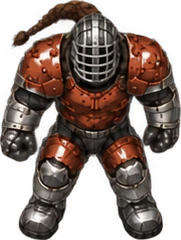
A second-division back line welded out of what the yard had in stock.
DEFSTA

Static Wolves
Their speed rating flatters a very thin squad sheet.
SPD

Bluecollar Riot
Aggression 56, intelligence 34. They keep coming anyway.
AGRPOW

Copperline Grinders
They break up the tempo and let the clock do the work.
DEFSTA

Dustbowl Raiders
Plenty of power, no plan, and the second-worst intelligence in the league.
POWAGR

Junkyard Howlers
Nothing above 50, nothing below 40, and they never go quiet.
No weak spot

Fringe Circuit
They read the game better than anyone in Division 2. Then they have to play it.
INT
Under the armour
The same match, worked out identically on every device
Every rule lives in one pure Dart library with no game engine inside it. That separation is what lets friends play together without a server of ours in the middle.
Deterministic by contract
A fixed 60 Hz tick, a seeded generator, no wall clock and no platform trigonometry. The same seed and the same inputs produce the same match, to the bit.
No game server
When two friends play each other, both devices simulate the match and only inputs cross the wire. In 3v3, the Circle and the Battle Arena, the host’s phone runs the match and sends it to the others. Either way there is no server to go down, and nothing anyone can switch off later.
Browser is a first-class target
The whole rules suite runs twice, native and then compiled to JavaScript, against the same pinned expectations. A browser int is a double, so arithmetic that overflows had to be rewritten to survive the trip.
Rendering never decides
The client draws the state and forwards the stick. Every rule that matters lives in the simulation, and it is tested on its own.
The ball is already charged.
It runs in the browser. Nothing to install, nothing to sign up for, nothing to buy.
Play slagballBest with the phone in both hands and the sound on.